Jimbaran Beach is a calm white-sand bay 15–25 minutes from Bali airport, known for sunsets and seafood on the sand. This guide covers the best time for sunset, how to get there, price and logistics, family and safety tips, and a quick FAQ so you can plan an easy visit and decide if Jimbaran fits your Bali itinerary.
Last verified: 28 December 2025 (WITA). Parking and chair-rental prices checked on site.
“Butuh versi bahasa Indonesia? Baca panduan Pantai Jimbaran ini.”
If you are still deciding whether to stay here and which area suits you, open our Jimbaran Bali area guide for first-time visitors.
List of Topics[Hide][Show]
Quick Answers
- Entrance fee: Free public beach.
- Best sunset window: Around 5.30–6.30 pm WITA (UTC+8) on clear days.
- Parking & rentals: See the Price & Logistics table below for typical ranges.
- Family base: Muaya Beach (south end) works best for families who want closer toilets, prayer rooms, and food.
- Swim safety: Gentle most days with a gradual sandy slope. Balawista lifeguards cover only some sections, so follow any flags and whistles.
Price & Logistics
| Item | Typical range |
|---|---|
| Parking: Motorbike | Rp 2.000–5.000 |
| Parking: Car | Rp 5.000–10.000 |
| Chairs + umbrella (2 + 1 set) | Rp 50.000–100.000 |
| Entrance | Free |
Note:
- Parking (motorbike): Varies by lot/operator; keep small cash (uang kecil).
- Parking (car): Varies slightly by area and operator.
- Chairs + umbrella: Check condition; often negotiable for longer stays or larger groups.
- Entrance: Public shoreline; no ticket gate or formal ticket office.
Quick facts for planning a visit to Jimbaran Beach
Typical distance and drive time: see Getting to Jimbaran for the single canonical list of drive times from South Bali and Ubud.
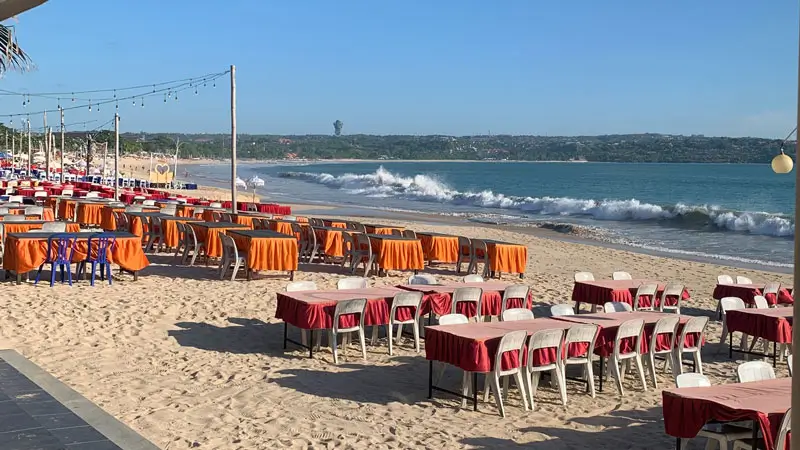
Many visitors end the day at simple tables on the sand, eating grilled fish (ikan bakar) while the waves stay in the background.
If you are already set on dinner on the sand, open our Jimbaran seafood dinner guide for zones, example prices, and tips on how to pick a restaurant.
Jimbaran Beach at a glance
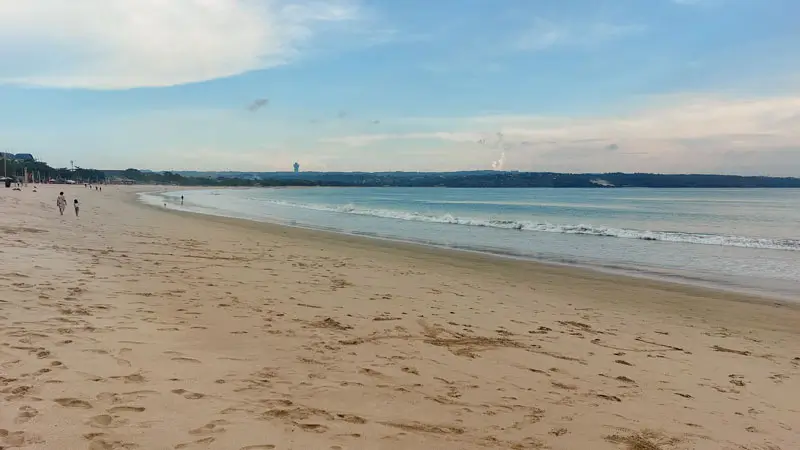
Jimbaran is quieter than many other South Bali beaches. The bay is wide and gently curving, the waves are usually small, and simple seafood cafes line much of the shoreline.
The beach suits visitors who want a slower pace by the sea, easy access to food, and space for children to play.
Jimbaran sits between busier strips such as Kuta and Legian and more village-style coastal areas such as Sanur.
If you want a similar calm-water feel on Bali’s east coast, see our Sanur Beach guide.
When to visit Jimbaran Beach
Jimbaran sunset timing: when to arrive
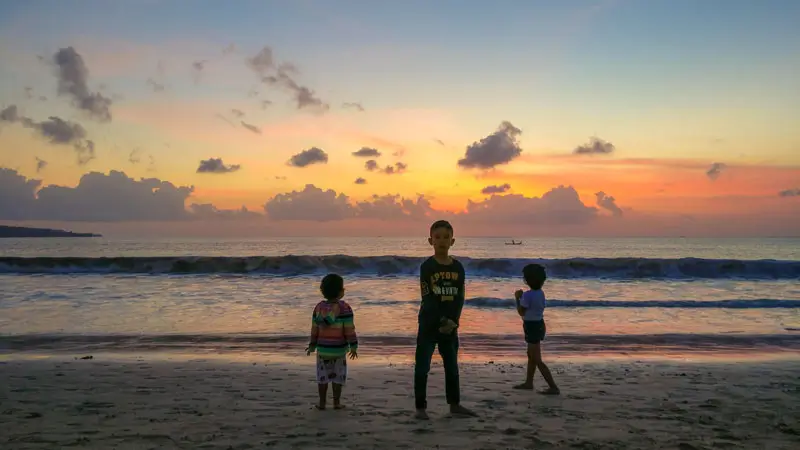
Jimbaran Bay is one of Bali’s better-known sunset spots. On clear evenings, the sky often turns warm orange over the ocean.
Arrive between 4 pm and 5 pm to find a spot near the water and settle in. Plan to stay until around 6.30 pm when the light usually looks best. Around this time, many beach tables start to light candles.
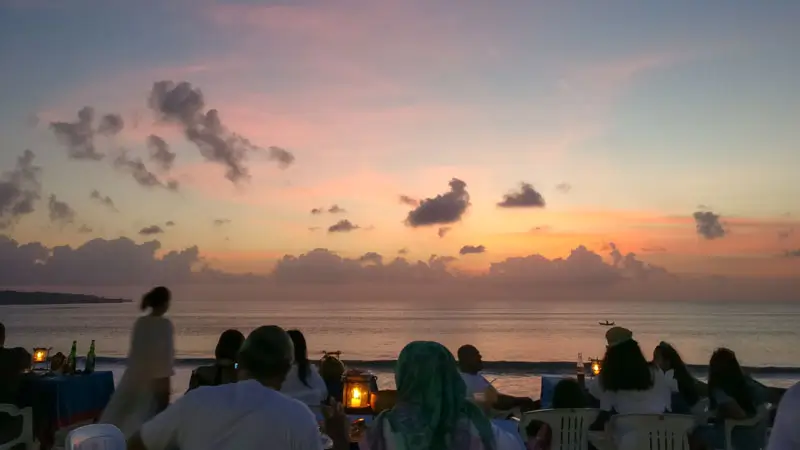
For simple photos, face the open ocean as the sun drops. Move slightly away from the busiest seafood cafe clusters if you want fewer people in the frame.
Jimbaran sunset & weather
During Bali’s rainy months, clouds can move fast. Some evenings feel dull, with colour appearing only for a short time.
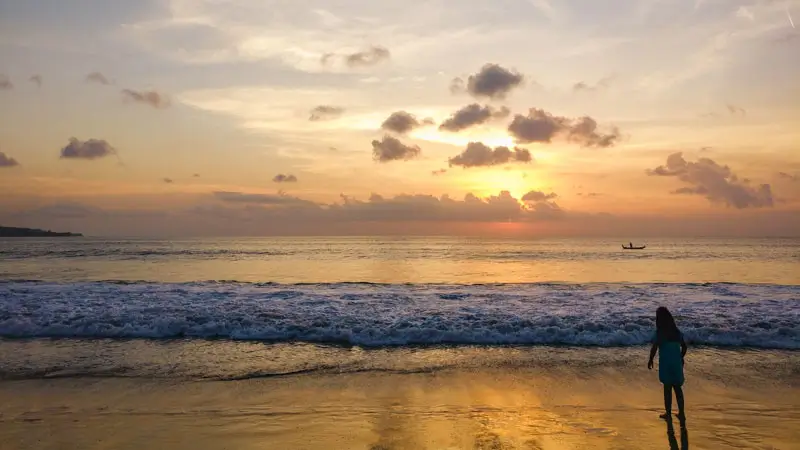
Before you go, check the Bali weather forecast for the Denpasar / airport area on a reliable weather site.
Expect short showers and brief clear gaps in the late afternoon. Even on days with rain, you often still get a softer glow over the bay for a few minutes.
Best months to visit Jimbaran (weather and crowds)
You can visit Jimbaran Beach all year, but the feel of the bay changes with the season.
In the dry season from May to September, the weather is usually drier with clearer skies and more consistent sunset chances, which suits dinner on the sand and long walks.
Evenings in June, July, and August can feel busy, especially during weekends and holidays, so arrive earlier if you want front-row tables on the sand.
In the shoulder months of April and October, humidity rises and short showers become more frequent. Crowds are often slightly lighter than in the peak dry season, yet many evenings still give good sunset light.
The rainy season lasts from November to March. Showers are more frequent, seas can be rougher, and parts of the beach can feel less tidy after a full day of rain.
If you care more about a seafood dinner than full beach time, Jimbaran still works well. Plan around showers and keep an eye on the forecast.
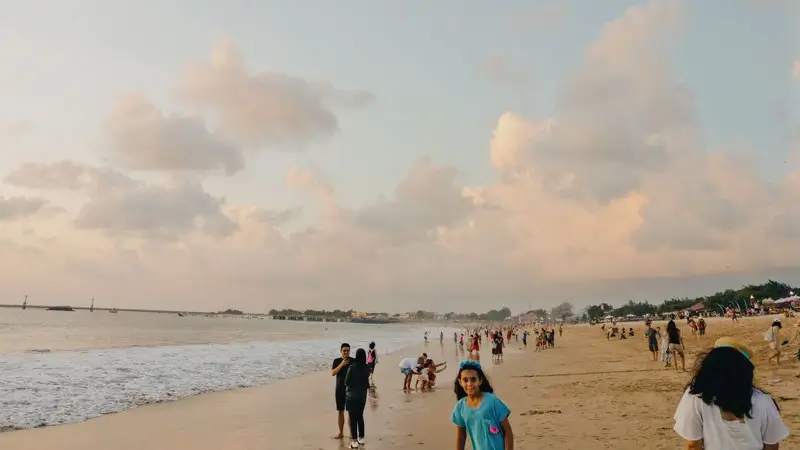
What Jimbaran Beach feels like
Jimbaran Beach daytime: layout & simple activities
Jimbaran Beach is a long, gently curving bay with soft sand and a wide shoreline. Small cafes and seafood restaurants sit close to the water, with gaps of quieter sand in between, so it is easy to find your own space.
In daylight, most visitors walk along the shoreline, swim in the shallow water, or take short breaks at cafes or beach stalls.
On clear days, you can see open ocean views and planes descending toward Ngurah Rai International Airport in the distance.
Jimbaran suits mixed groups who want a low-key beach stop. It works for couples who prefer a calmer setting by the sea, families who need easy access to food, toilets, and shade, and solo travellers who enjoy long, quiet walks and people watching. Many travellers use Jimbaran as a half-day stop before dinner.
Late afternoon atmosphere with locals and families
In the late afternoon, Jimbaran often feels like a local neighbourhood beach. You may see children kicking a ball barefoot on the sand, dogs playing near the shoreline, and shopkeepers placing daily offerings called canang sari.
This is a good time to walk the bay in cooler temperatures, sip a fresh coconut from a beachfront stall, and let children build sandcastles while the sun drops lower.
On clear days, you can also see the Garuda Wisnu Kencana (GWK) statue on the hills to the south. Many restaurants are family-run, and the mood usually stays relaxed as dinner time approaches.
After dark: candles, music, and dinner on the sand
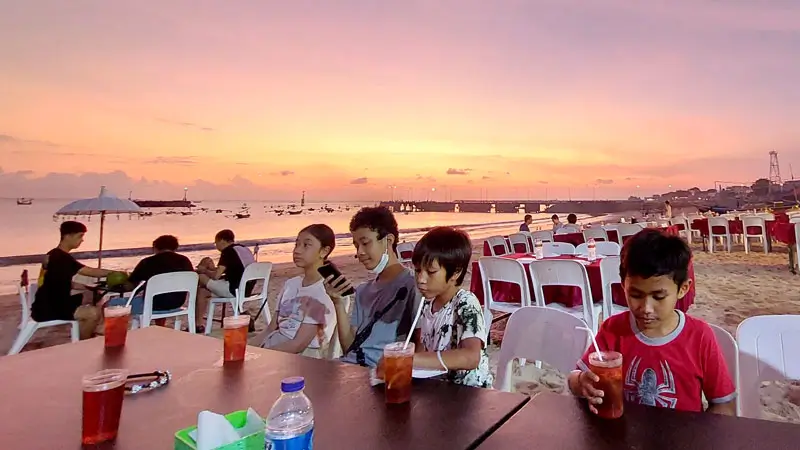
Once the sun sets, the bay shifts into dinner mode. Tables sit directly on the sand, often with candles or string lights. The smell of seafood grilling drifts along the shore, and you hear the waves just beyond the tables.
Some evenings, you may also see acoustic musicians or small Balinese dance performances in front of certain restaurants. After you eat, you can take a short walk along the waterline or stay longer at your table and enjoy the cooler night air.
If choosing a specific restaurant and planning your budget is your main focus, pair this page with our Jimbaran seafood dinner guide for venue zones and price examples.
Cleanliness, swimming safety, and family-friendly spots
Jimbaran usually works well for families, but conditions shift with the weather and currents. A quick check on arrival helps you pick the best spot for kids and non-swimmers.
Cleanliness by season and area
The shoreline often feels cleaner around the main cafe clusters and Muaya Beach at the southern end of the bay. Local businesses and banjar (village community) teams often sweep the sand in front of their section.
After heavy rain or storms, natural debris and trash can wash up The northern stretch can collect more rubbish due to currents. Before children start playing, take a quick look at the sand and water and choose the cleanest area.
Swimming conditions and lifeguard coverage

Most days, the bay has gentle waves and a gradual sandy slope, which suits paddling and short swims close to shore.
Balawista lifeguards work across Badung’s main beaches, including parts of Jimbaran. However, they do not cover every point along the bay or stay in one place all day.
Stay in the shallows, avoid swimming alone, and follow any flags, whistles, or instructions you see.
Best spots for families near Muaya Beach
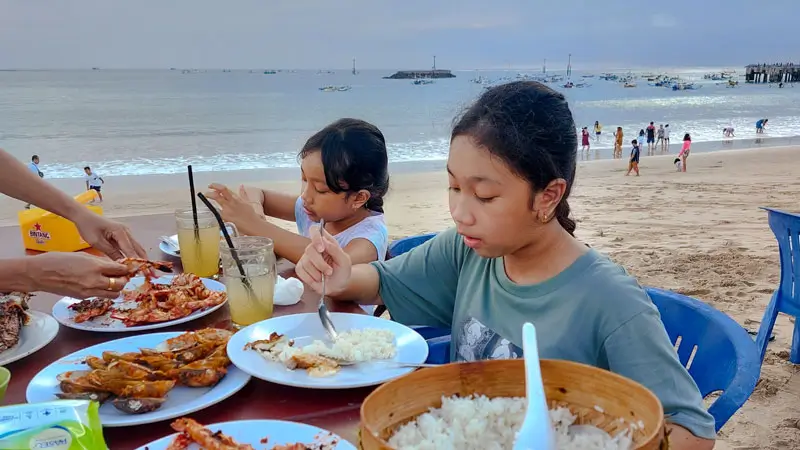
For easier logistics with children, many families choose the Muaya Beach (Google Maps) area at the southern end of the bay and sections near the main cafe rows, where facilities are closer.
These areas often feel calmer than the busiest seafood clusters and make it easier to reach toilets, prayer rooms, and seating.
Safety reminders for kids and non-swimmers
Basic habits help. Avoid swimming far out, especially in strong tides or after dark. Watch for rocks and uneven patches underfoot, and ask children not to play near fishing boats, active grill areas, or steep shore breaks.
If you feel unsure about conditions, keep playtime in ankle–knee-deep water.
Getting to Jimbaran Beach
Drive times and simple directions (canonical list)
Traffic in Bali changes by time of day and season. As a rough guide by car:
- Airport → Jimbaran: 15–25 minutes.
- Kuta/Tuban → Jimbaran: 30–45 minutes.
- Seminyak → Jimbaran: 30–60 minutes.
- Canggu → Jimbaran: 40–60 minutes (route dependent).
- Uluwatu (clifftop temple area) → Jimbaran: 30–45 minutes.
- Ubud → Jimbaran: 90–120 minutes.
For current routes, open Jimbaran on Google Maps from your hotel or villa.”
If you prefer point-to-point transport, you can book a Bali private car and driver with Wira Tour for a half-day that includes Jimbaran.
Airport to Jimbaran Beach and transport options
Jimbaran is one of the closest beach areas to Ngurah Rai International Airport (see drive times above).
At the airport, you can usually choose between Grab and Gojek (designated pickup zones), regular airport taxis at the official taxi counters, or pre-booked private drivers waiting at the arrival area.
During peak hours and holidays, queues can form and app prices may surge. Families and groups with large luggage often find a pre-arranged driver more predictable.
App-based cars can usually drop you near the beach. For pickup, local regulations sometimes limit access directly in front of the seafood cafe strip, so you may need to walk to the main road or use a local taxi or pre-booked driver to return to your hotel.
If you arrive by car or motorbike, ask your driver to drop you near your preferred seafood cafe or sunset spot so you do not need to walk far on the sand.
You can also combine Jimbaran with Uluwatu temple or the airport in a simple half-day using a private car and driver.
Entrance, parking, and drop-off points
Is Jimbaran Beach free to enter?
You do not need a ticket to enter Jimbaran Beach. The shoreline is public, and you can walk along most of the bay without passing through gates. You only pay for parking, food, drinks, and any rentals on the sand.
Parking needs
For typical ranges, see the Price & Logistics table. Fees can vary slightly by area and operator, so keep small cash (uang kecil) ready for attendants.
Best drop-off points for sunset and dinner
If your main goal is sunset and seafood, ask your driver to drop you near Muaya Beach at the southern end of the bay. This area gives easier access to seafood cafes and a calmer stretch of sand.
Use marked parking or drop-off points behind the main restaurant rows, then walk a short distance through the cafes to reach the beach.
On-site facilities and simple comforts
Jimbaran has enough basic facilities for a relaxed half-day or evening visit, without feeling like a fully built resort strip.
Toilets, prayer rooms, and simple etiquette
You can find public toilets near the coastline, often managed by local cafes or the nearby village. If you eat at one of the cafes, toilet use is usually included, although standards can vary.
Prayer rooms (musholla) are available in some public facility clusters and larger beachfront restaurants. If you do not see a sign, ask the staff at your chosen cafe, and they can point you to the nearest mosque.
At the beach, standard swimwear is fine. However, when you leave the sand, walk near prayer areas, or enter cafes and restaurants, put on a light shirt, dress, or sarong over your swimwear as a basic sign of respect.
Chair and umbrella rentals on the sand
If you want shade and a seat close to the water, rentals are easy to spot along the beach. See the Price & Logistics table for typical ranges. Some chairs look older or worn from the sea air, so check their condition before you pay.
Where to stay near Jimbaran Beach
There is a wide range of accommodation around Jimbaran, from full-service resorts to simpler guesthouses behind the bay.
Cliffside resorts around Jimbaran and nearby Uluwatu offer wide ocean views, strong sunset panoramas, and more privacy in a resort-style setting. You will usually need a short drive to reach the beach.
Bayfront hotels and mid-range resorts along or just behind the sand make it easy to walk to dinner, catch sunset on most evenings, and enjoy a relaxed morning on the beach before an airport transfer or your next Bali stop.
In the village streets behind the main bay, guesthouses, homestays, and small family-run inns offer simpler rooms and friendly hosts within short walks or scooter rides to the beach.
This suits travellers who prefer local warungs, ride-hailing apps, and spending more of their budget on activities and food rather than on a luxury hotel.
FAQ: entrance, directions, things to do, and nightlife
Is there an entrance fee for Jimbaran Beach?
No. Jimbaran Beach is a free public beach. For typical costs and drop-off points, see Entrance, parking, and drop-off points and the Price & Logistics table.
How do I get to Jimbaran Beach from popular areas in Bali?
See Getting to Jimbaran for the single canonical drive-time list and routing tips from the airport, South Bali, and Ubud.
What are the main things to do in Jimbaran?
Most visitors spend time on the sand, paddle in the sheltered bay, watch planes and the sunset, and end the day with a seafood dinner on the beach. For a fuller picture, see What Jimbaran feels like.
What is Jimbaran nightlife like?
Nightlife in Jimbaran is low-key: sunset dinners, occasional acoustic music, and early nights. It feels quieter than Kuta, Legian, or Seminyak and suits couples, families, and travellers who prefer a relaxed evening by the sea.
For specific venues and sample evening plans, see our guide to Jimbaran nightlife.
 20 Best Places to Visit in Bali for First-Time Travelers (2026 Guide)
