This guide helps you choose water activities in Bali for non-swimmers that feel safe today, and it shows when you should skip. Safe or skip: use the 60-second checklist below before you choose.
- Written by Wayan Suadnyana
- Reviewed by Desak from the Wira Tour Bali Reservation Team
- Last updated: 17 February 2026
This guide is not a substitute for professional medical advice. If you have health concerns, ask the operator how their screening process works before you decide.
List of Topics[Hide][Show]
Start here: what feels risky if you can’t swim in Bali water activities
You don’t have to push yourself when you feel unsafe. What you need is a plan. This page helps non-swimmers pick a Bali water activity that feels safe today, and shows when it’s best to skip.
For most water activities, you’ll wear a life jacket, and staff will be close by. Swimming isn’t usually the problem. The real challenge is staying calm if the water is rough, the briefing is rushed, or you don’t know how to stop.
Safety suitability guide, not a pricing page. For prices and booking steps, use the links in “What this page does not cover”.
Water activities in Bali for non-swimmers: safe or skip today
The two conditions that matter most
- Calm water in the activity zone
- Close supervision, with a clear stop procedure
If either one is missing, choose a simpler option or reschedule.
How to check sea conditions
To check today’s sea conditions, use the official BMKG Bali marine forecast (in Indonesian). You can use your browser’s translate tool if needed.
What to check in 60 seconds before you commit
- The life jacket fit is checked and feels secure.
- You know who will watch you closely and where you will stay in the water.
- You understand the stop signal, and the staff confirms they can end it fast.
- You can repeat the stop signal back to the guide in one sentence, and they confirm what will happen next.
- You understand the cancellation or reschedule rule for rough sea conditions.
When to skip or reschedule
- It’s windy, or the water looks choppy in the activity zone.
- The briefing feels rushed, unclear, or you do not understand the stop procedure.
- Staff are not keeping the area controlled and supervised.
- You feel panicky today, and the team cannot explain a calm, step-by-step plan.
Common triggers that make activities feel stressful
- Face splashes, mask leaks, and rushed breathing through a snorkel.
- Choppy water or wind that makes you feel out of control
- An unclear stop signal, or you do not know how the staff ends the activity fast
Who should be more cautious?
Be extra careful, and ask the operator how screening works before you decide, if you have any of these:
- Ear or sinus problems
- Respiratory problems
- Pregnancy
- Recent surgery
- High anxiety today
What this page does not cover
This page does not provide prices, packages, or booking steps. Use the links below.
- See prices and what’s included for Tanjung Benoa water sports (ride options).
- Compare water sports packages (3 to 6 activities) and what’s included.
- Read the booking rules and reschedule policy before you pay, so you know what happens if the sea turns rough.
- If you need a general overview first, start with the Bali water sports hub (Home).
Water activity comfort tiers for non-swimmers
Tier 1: mostly dry option
Best if you’re more afraid of being in the water than of heights.
- Parasailing
Tier 2: on the water with a life jacket and close supervision
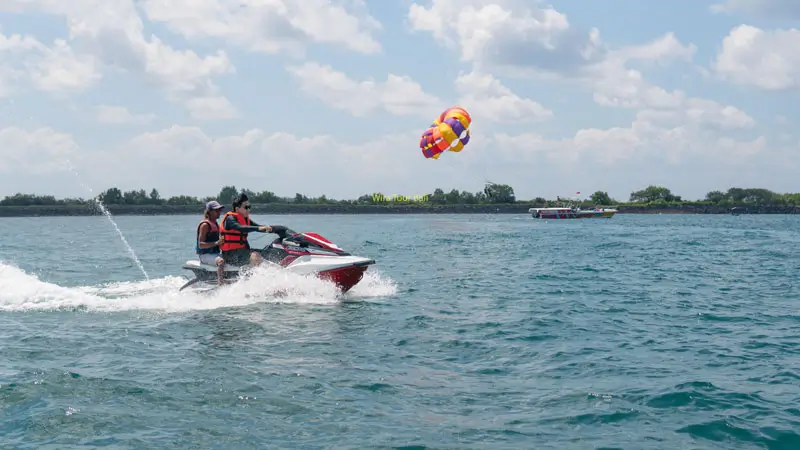
Best if you want fun, and you need an easy way to stop.
- Banana boat
- Jet ski with an instructor
Tier 3: in the water with close supervision
Best if you can stay calm by focusing on breathing, and you want to see the underwater sights.
- Seawalker
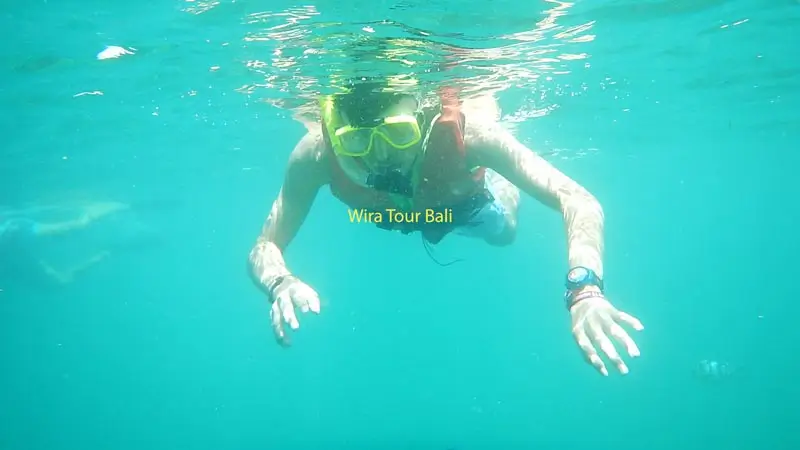
- Snorkelling with a life vest and a guide
One rule about rescheduling
If it’s windy, the water is choppy, or you feel anxious today, choose a lower tier or reschedule. It’s safest to skip if conditions aren’t right.
Snorkelling in Bali for Non-Swimmers (Snorkeling)
This is a safety decision preview for non-swimmers. It is not a full snorkelling guide, a spot comparison, or a booking page.
60-second Snorkelling safety check for non-swimmers
Go ahead today if all points below are true.
- The sea looks calm in the activity zone, with no visible chop, swell, or current.
- A guide confirms they will stay within arm’s reach of non-swimmers
- You wear a life vest the whole time, and it is checked for fit.
- You get a short practice in shallow water first, to test breathing and mask comfort.
- You understand the stop signal, and the guide confirms they can end the session fast.
Skip today if any point below are true.
- Wind is picking up, or the water looks choppy
- No close supervision is assigned to non-swimmers
- No shallow-water practice is offered
- The briefing feels rushed, unclear, or you do not understand the stop procedure
Why this works for non-swimmers
- A life vest keeps you afloat without swimming
- A guide stays close and can assist if you tense up
- You can stop the session early on signal
Panic factor and what feels scary
Panic level: 7 out of 10. Common triggers:
- Breathing through a snorkel
- Mask leaks
- Face splashes
- The sensation of having your face in the water
Red flags
- No guide stays close to non-swimmers
- Visible chop, swell, or current
- No practice time in shallow water
- You feel pressured to continue after you say you feel anxious
- No clear plan if conditions change during the session
What to ask before you go
- “Will a guide stay with me within arm’s reach the whole time?”
- “Can we practice breathing and mask fit in shallow water first?”
- “Do you have a float line or buoy I can hold if I tense up?”
- “If the sea gets choppy, do you switch to a calmer spot, or cancel?”
- “What is the stop signal, and how fast can we end the session?”
Next step
If snorkelling feels right today, see Snorkelling in Tanjung Benoa Bali prices and what’s included.
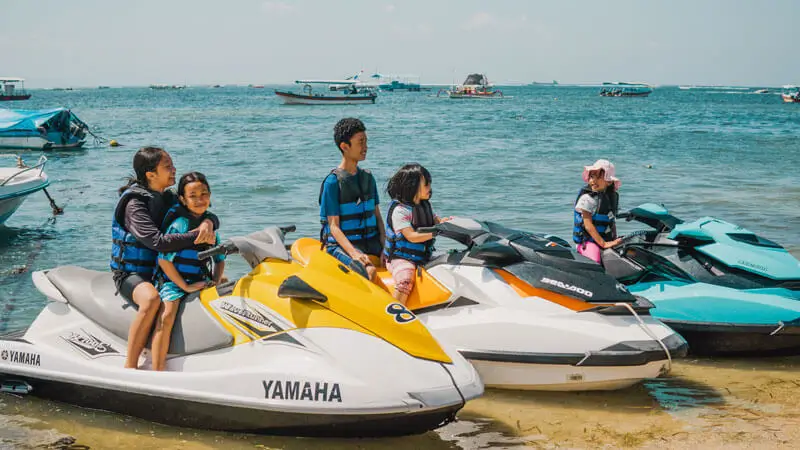
Jet ski in Bali for non-swimmers
Instructor-led only.
This is a safety decision preview. It is not a jet ski rental guide, a pricing page, or a full rules FAQ.
60-second Jet ski safety check for non-swimmers
Go ahead today if all the points below are true.
- The water looks calm in the riding zone, with no visible chop or swell
- The operator confirms an instructor will ride with you, or stay right beside you the whole time
- The riding boundary is clearly explained, and you can point to it on the water
- You understand the stop signal, and the instructor confirms that they can stop fast
- The area is not crowded with other watercraft
Skip today if any point below are true.
- The water is choppy, the wind is picking up, or you feel unstable
- Only a solo ride is offered to first-timers
- The zone is crowded, or there is no clear separation from other boats
- No clear boundary, no clear stop procedure, or the briefing feels rushed
- Staff rush you onto the jet ski before you understand the rules
Why this can work for non-swimmers
- You wear a life jacket
- With an instructor, you do not have to manage speed and balance alone
- You can start slow and stop on signal
Panic factor and what feels scary
Panic level: 5 out of 10. Common triggers:
- Engine noise and speed
- Fear of losing control
- Crowded zones and unpredictable traffic on the water
Checklist before you pay
- Confirm instructor-led, not solo
- Ask where the boundary is, and what happens if you cross it
- Ask about the stop signal and how quickly the instructor can end the ride
- Ask where you start, where you stop, and how they bring you back if you want to end early
- Check the life jacket fit before getting on the jet ski
Safe zone rules to insist on
- A defined riding boundary and a clear no-go area
- A calm entry and exit point, away from traffic
- A dedicated supervisor watching the zone, not only selling rides
- A slow start option for the first few minutes
If you want to stop early, what should happen
- You give the stop signal agreed in the briefing
- The instructor slows down immediately, then stops in the safe zone
- The instructor confirms the next step, return to the start point, or escort you back slowly
If the team cannot explain this clearly before you start, skip today.
Next step: If you choose instructor-led only, check the Jet ski in Tanjung Benoa Bali instructor-led options and prices.
Parasailing in Bali for non-swimmers
Wind and harness checks
This is a safety decision preview for non-swimmers. It is not a parasailing price page, a booking page, or a full operator guide.
60-second Parasailing safety check for non-swimmers
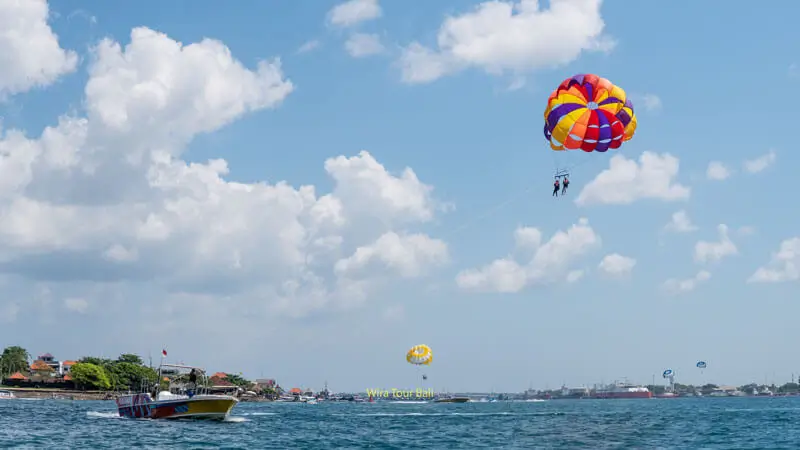
Go ahead today if all points below are true.
- Wind feels steady, not gusty, and the water surface looks mostly smooth in the takeoff zone.
- The crew gives a calm, clear briefing that you understand
- You see a proper harness check, and you feel snug and secure, no twisting or slipping
- Takeoff and landing are explained step by step, including what to do with your legs and hands
- The crew can explain what happens if you panic mid-air, clearly and calmly
Skip today if any point below are true.
- Wind feels gusty, flags snap hard, or the sea has visible whitecaps and spray.
- The crew rushes you, or you do not understand the takeoff and landing steps.
- The harness feels loose, twisted, or painful, or the crew will not re-check it.
- The team cannot explain what happens if you panic mid-air
- The platform area looks chaotic, crowded, or poorly controlled
Panic factor and what feels scary
Panic level: 6 out of 10. Most anxiety comes from height and takeoff, not from the water.
Simple wind threshold you can use without numbers
Choose a calmer day if you notice any of these.
- Repeated strong gusts hit your face while you are waiting
- The boat rocks sharply even before takeoff
- The sea surface shows whitecaps or constant spray near the takeoff zone
- Staff say conditions are close to their cancel limit, even if they still offer rides
If you are unsure, skip. Wind is the main factor that turns a safe ride into a stressful one.
How takeoff and landing should work
This is the basic flow you should hear in the briefing.
- Harness fitting and adjustment, then a second check before attachment
- Attachment to the tow line and a clear “ready” signal from the crew
- Takeoff as the boat gains speed, and the canopy lifts you smoothly
- Flight with steady towing, and instructions on how to sit and relax your legs
- Landing as the crew reels you in slowly, lowers you to the platform, then unhooks you
Harness check checklist
- The crew checks straps, buckles, and connection points in front of you
- You feel snug at the waist and thighs, no sliding, no twisting
- The attachment points look aligned, and the crew confirms they are locked
- You get a final re-check right before takeoff
If something feels off, ask them to stop and re-fit it.
If you panic mid-air, what should happen
- You use the agreed signal to show you want to come down
- The crew reels you in and lowers you gradually, no sudden drops
- You land on the platform, then the crew unhook you before you stand up
Next step: If the wind feels steady and the harness checks are clear, see Tandem parasailing in Tanjung Benoa prices and basic requirements.
Seawalker vs snorkelling: the simple choice rule
Simple choice rule
- If your fear is face splashes and snorkel breathing, a seawalker often feels calmer
- If your fear is being underwater and ear pressure, snorkelling often feels safer on a calm day with close guiding
Seawalker safety module
This is an overview designed to help individuals who feel nervous about swimming and are considering a seawalking experience. It’s not a full guide with all the specific instructions for the seawalking activity.
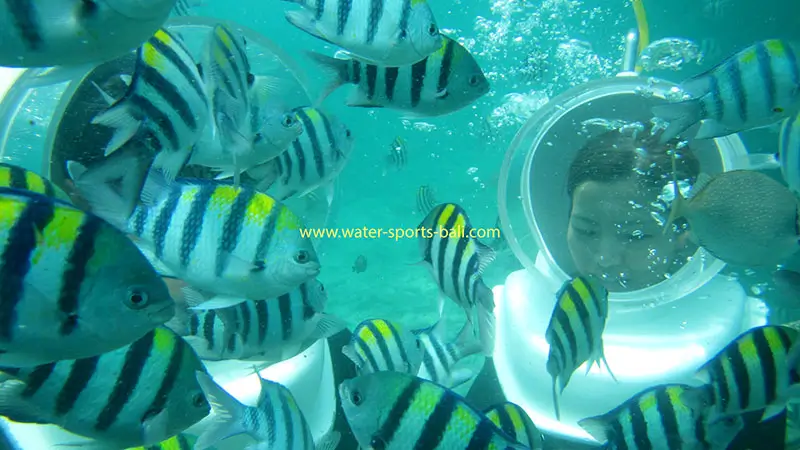
Why does this work for non-swimmers
- You do not need to swim or float; you walk slowly on the seabed
- You breathe through a helmet air system
- Guides stay close and can assist physically
Panic factor and what feels scary
Panic level: 5 out of 10. Common trigger: being underwater and feeling ear pressure.
Red flags
- Choppy water, surge, or poor visibility that makes you uneasy
- Strong ear pressure right away, and the team cannot explain how they manage it
- You are unwell or highly anxious today
What to ask before you go
- “How many guides will be with our group underwater?”
- “If I panic, how do I signal, and how fast can we go back up?”
- “Do we do a short, shallow practice first?”
- “What sea conditions make you cancel seawalker?”
Next step: If seawalker feels calmer than snorkelling today, check Seawalker Tanjung Benoa Bali suitability and price details.
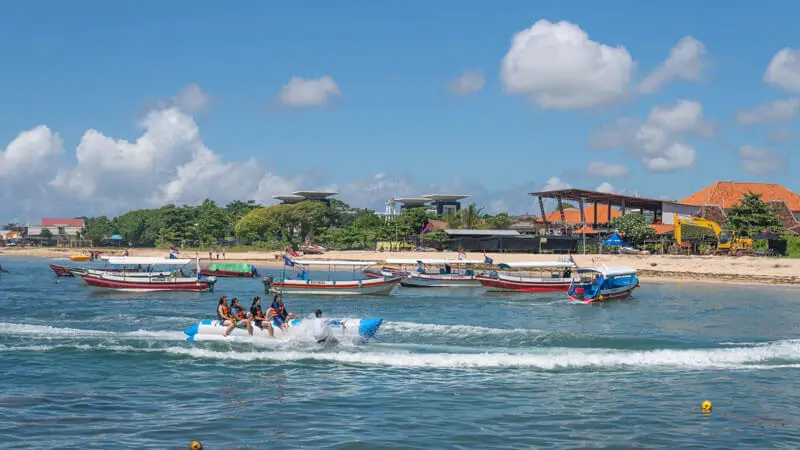
Banana boat for non-swimmers
Low-stress setup, not the flip ride
Scope note: This is a safety decision preview for non-swimmers, not a banana boat price page or a full activity rules or cancellation guide.
Why this can feel safe
- You wear a life jacket for the entire ride
- You have sturdy handles to hold
- The towing boat can stop quickly on signal
Panic factor and what feels scary
Panic level: 4 out of 10. The main worry is falling in, especially if the ride is meant to be rough.
Red flags
- The operator advertises “flip guaranteed,” and you want to stay calm
- The water is visibly choppy, or the wind is picking up
- No clear stop signal is explained
What to ask before you go
- “Can we do a gentle ride, not a flip ride?”
- “What is the stop signal if I feel scared?”
- “Who is watching us from the towing boat the whole time?”
- “Can you tighten and re-check my life jacket fit?”
Next step: If you want a gentle ride, see the Banana boat rides in Tanjung Benoa, Bali, for prices.
If the sea is rough today, lower-water alternatives
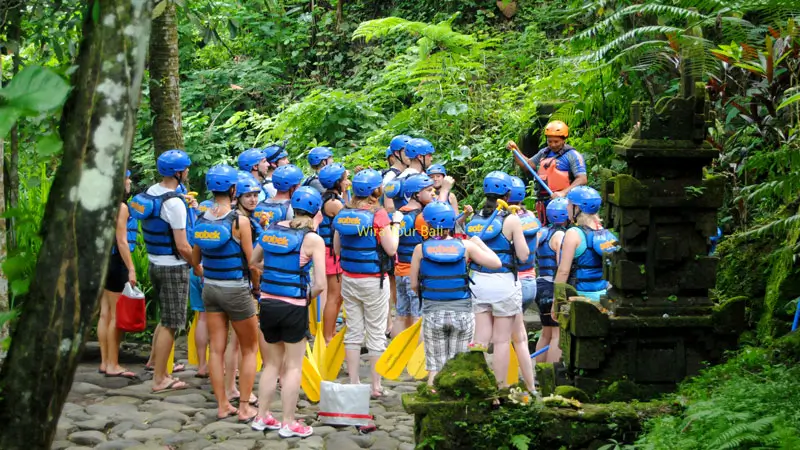
These are non-ocean alternatives for days when the sea feels unsafe. They are not water sports rides, but they help you avoid a wasted day.
- Gentle guided river rafting, including life jackets, helmets, and a guide
- Sunset dinner cruise with an ocean view and minimal water exposure
FAQ: swim requirement and safety questions
Do I need to know how to swim for snorkelling
No. You do not need to be a strong swimmer if you wear a properly fitted life vest and a guide stays within arm’s reach. Skip if the water looks choppy, or close supervision is not confirmed. Read the full checklist above in: Snorkelling in Bali for Non-Swimmers.
One last note: Water activities in Bali for non-swimmers
You don’t need to push yourself through fear. Use the tier system, check the red flags, and permit yourself to stop early.
 Scuba Diving in Bali for Beginners: Choose Your Area
